Many people only realise that dogs can donate blood when their own dog suddenly depends on a transfusion. For us, however, blood donation in dogs is connected with very personal experiences.
On 3 March 2020, our English Mastiff Holly donated blood for the first time at the Tierblutbank Elversberg. Later, Miss Marple, Greta and Magnus also donated blood at the University Veterinary Clinic in Gießen.
That means four of our Mastiffs have already been able to help other dogs. We do not take this for granted. For us, it is a special opportunity to use the health, strength and calm nature of our dogs to help others.
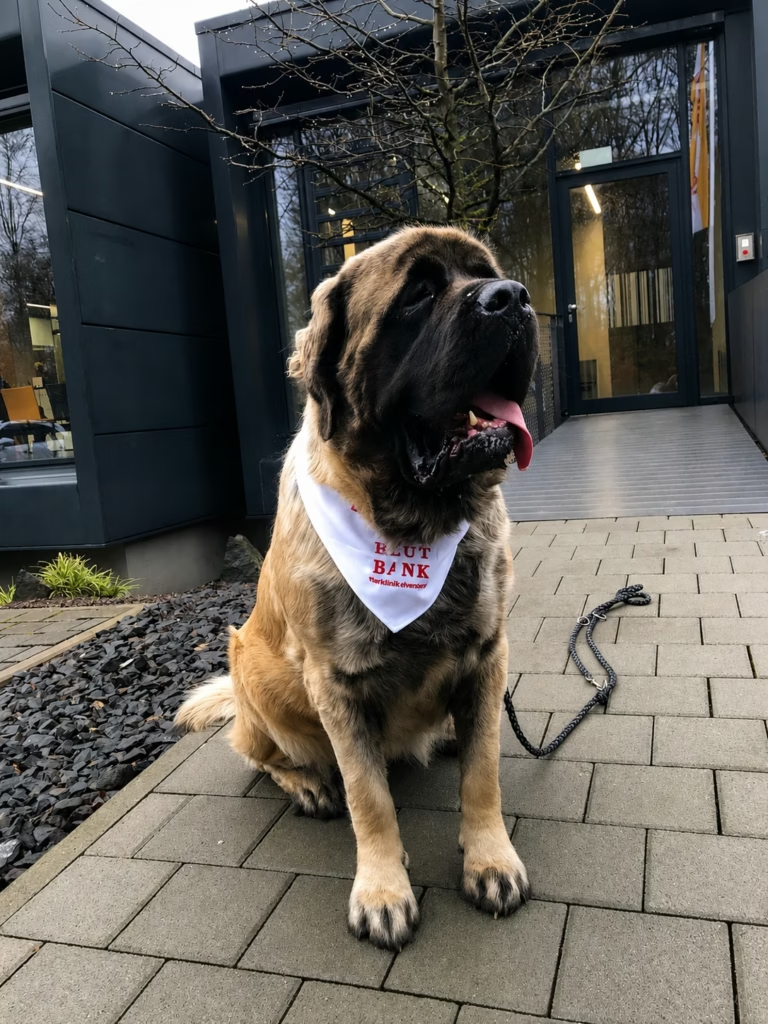
Holly – Our First Blood Donor
Holly was just over two years old when we took her to donate blood for the first time. Before a dog is accepted as a donor, careful checks are carried out to ensure that donating blood is safe for its health. These include a veterinary examination and blood tests.
After the donation, Holly sat outside the clinic wearing the blood bank’s bandana. For her, it was probably simply an unusual appointment with lots of new impressions and an extra reward. For us, however, that photograph came to mean much more.
Holly had given something that cannot be artificially replaced and that could offer a seriously ill or injured dog another chance. That experience is one of the reasons why blood donation in dogs did not remain a one-time event for us.
When Do Dogs Need Donated Blood?
After a serious accident, internal bleeding or major surgery, a dog can lose a large amount of blood within a very short time. Severe anaemia, certain illnesses, clotting disorders or poisoning can also make a blood transfusion necessary.
The donated blood is not always used as whole blood. Whole blood can be separated into red blood cells and plasma. Red blood cells are mainly needed in cases of severe blood loss or serious anaemia, while plasma can help with certain clotting disorders.
The veterinary team treating the patient will always decide which blood product is required.
Blood products also have a limited shelf life. Veterinary clinics cannot simply build up a supply once and rely on it indefinitely. They regularly depend on healthy and suitable donor dogs – long before the next emergency occurs.
Why Large Dogs Can Make a Particularly Big Difference
As a rough guideline, a suitable dog may be able to donate a volume of blood equivalent to around one percent of its body weight. This corresponds to approximately ten millilitres per kilogram. The amount actually collected, however, is always determined by the individual clinic based on the dog and the donation system being used.
A large and heavy dog can therefore provide a comparatively substantial amount of blood in a single donation. This is one of the particular strengths of our Mastiffs.
At the same time, the amount of blood required by a sick dog also depends on its body weight and medical condition. In an emergency, a Mastiff itself may require a considerable amount of donated blood. Where a large dog is able to give more, considerably more may also be needed if that dog ever becomes the patient.
For us as Mastiff owners, this creates a particular sense of responsibility. Due to their size, our dogs already meet one important requirement. If they are also healthy, well-balanced and comfortable with the necessary examinations, they can make a particularly valuable contribution as blood donors.
However, this responsibility must never involve forcing a dog to donate. Not every large dog is automatically a suitable donor.
The welfare of your own dog must always come first, even when you want to help another.
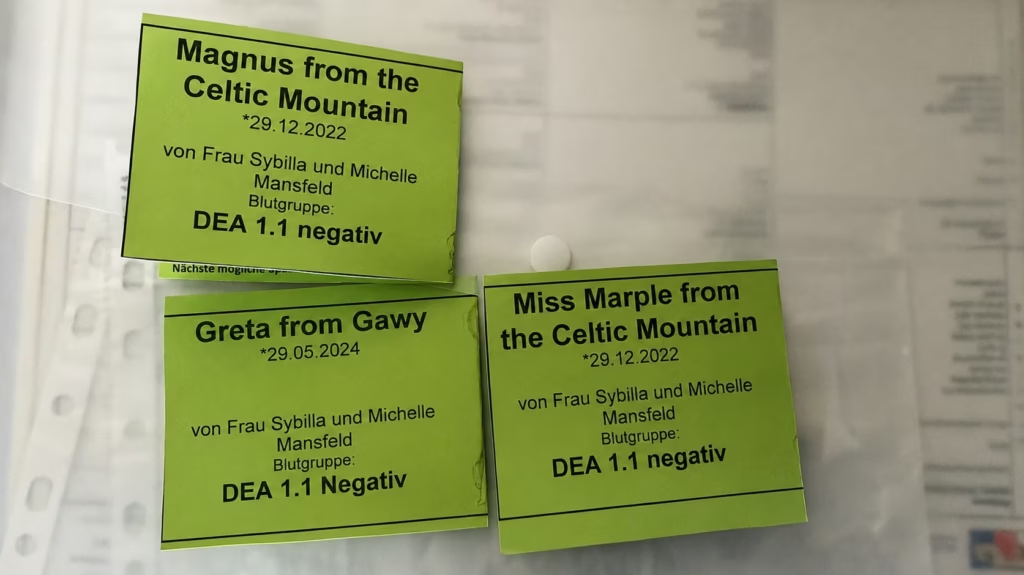
Together with Holly, this means that four of our Mastiffs have already been blood donors.
More Than Size and Body Weight
Besides weight, the dog’s health and behaviour are particularly important. Requirements vary between veterinary clinics and blood banks, but a donor dog should usually:
- be healthy and have normal blood test results,
- meet the required minimum weight,
- fall within the specified age range,
- be calm, friendly and easy to handle,
- not be receiving medication that would prevent blood donation,
- never have received a blood transfusion itself.
Vaccination status, previous illnesses, travel abroad and possible infection risks may also play a role in the assessment. Before being accepted as a donor, the dog is therefore examined thoroughly. Depending on the donation programme, its blood group and other values may also be determined. Miss Marple, Greta and Magnus were identified in Gießen as DEA 1.1 negative. Determining the blood group is an important part of the preparation so that donated blood can later be used as safely and appropriately as possible. Calm behaviour cannot be attributed to breed alone. Our Mastiffs are very people-oriented and trust us even in unfamiliar situations. Nevertheless, we always look at each dog individually and consider how it responds to the examination and the blood collection.
If a dog shows clear signs of fear or significant stress, it should not be forced to donate blood.
Helping another dog should never come at the expense of the donor dog’s welfare.
How Does Blood Donation in Dogs Work?
The first step is to contact a veterinary clinic, university veterinary hospital or animal blood bank. They will usually begin by asking for the most important information about the dog’s age, weight, health, medication and any previous travel abroad.
If the dog is considered generally suitable, a veterinary examination follows. Its blood values are checked, and depending on the donation programme, further examinations and blood typing may also be carried out.
For the blood collection itself, a small area of the neck is shaved and disinfected. The blood is collected from the jugular vein through a sterile system directly into a blood bag. A calm and cooperative dog can normally undergo blood donation without sedation.
The collection itself usually takes only a few minutes. Afterwards, the dog is allowed to rest and is often given water, food or a special treat. More strenuous physical activity should be avoided for the rest of the day in accordance with the clinic’s instructions.
For a relaxed dog, blood donation is usually a manageable appointment. For the dog that later needs the blood, however, that very donation may make all the difference.
Four Mastiffs Who Were Able to Help
Our personal experience with canine blood donation began with Holly. The fact that Miss Marple, Greta and Magnus later also proved to be suitable donors strengthened our conviction even further.
We do not share their story to portray our dogs’ blood donations as some extraordinary achievement. The dogs themselves do not know why their blood is being taken. We humans make that decision for them and therefore carry the responsibility for ensuring that the process is calm, safe and respectful.
For us, responsible Mastiff ownership means more than simply looking after the health and welfare of our own dogs. It also means recognising the particular possibilities these large dogs offer and helping where doing so is appropriate for the individual dog.
Holly, Miss Marple, Greta and Magnus were able to help because they were healthy, met the necessary requirements and were able to handle the situation calmly.
That is something we are quietly proud of.
Perhaps Your Dog Could Help Too
If you have a large, healthy and even-tempered dog, you can contact a veterinary clinic or university veterinary hospital in your area and ask whether they are looking for blood donors.
Some clinics maintain a permanent register of donor dogs. Others also look for dog owners who can be contacted at short notice in an acute emergency. As weight requirements, age limits and examinations can vary, the current criteria should always be checked directly with the individual institution.
Not every dog can become a blood donor. But there may be far more suitable dogs than many people realise – and many owners simply do not yet know that this possibility exists.
Because sometimes a healthy dog can give another something that nothing else can replace: another chance.
You can find more articles about health, development and everyday life with the English Mastiff in our Mastiff Guide.
A Note From Us
We are writing here as experienced Mastiff breeders and dog owners, not as veterinary professionals. This article combines our personal experiences with generally available information and is not a substitute for veterinary advice. Whether a dog is suitable to donate blood or requires a transfusion must always be decided by the veterinary team responsible for its care.
Further Information
– Tierklinik Elversberg – Animal Blood Bank
– University Veterinary Clinic Gießen – Information for Blood Donors
– Freie Universität Berlin – Blood Donation in Dogs