On 15 and 16 August 2026, we will be attending the Double CACIB show in Ludwigshafen. As part of our preparations, we are once again looking particularly closely at our dogs: their appearance, movement, temperament and all the qualities that make a typical English Mastiff.
I would like to use this occasion to present our special breed in greater detail – not only through the official breed standard, but also from my own personal perspective. That perspective has been shaped by more than 30 years with Mastiffs, numerous dog shows, many puppies raised and countless shared memories.
You can learn more about our history, our breeding philosophy and life with our dogs on our About Us page.
A breed profile can describe measurements, colours and physical characteristics. What it really means to live with a Mastiff, however, can only truly be understood through shared experience.
Mastiffs have been part of my life since 1995. Over all these years, I have watched puppies grow up, come to know many different personalities, presented our dogs in the show ring and accompanied families on their journey towards their own Mastiff.
Even so, I still find it difficult to describe this breed in just a few sentences.
The Mastiff is, of course, an exceptionally large and powerful dog. When people meet one for the first time, they usually notice the impressive appearance first: the broad head, deep body, strong bone structure and the particular calmness with which a Mastiff observes the world around him.
Anyone who lives with a Mastiff, however, soon discovers something else.
Behind that imposing appearance is a sensitive, affectionate companion with a close bond to his people. A dog who does not need to be the centre of attention all the time, yet still prefers to be part of everything. One who may simply lie quietly beside us – and, by doing so, gives us the feeling that someone very special is at our side.
For me, the true size of a Mastiff is not measured in kilograms, but in character.
With this breed profile, I therefore do not simply want to describe what an English Mastiff looks like. I want to explain what it feels like to live with this remarkable breed – and why it has continued to fascinate me for more than three decades.
We present the dogs that shape our breeding today in detail on our Our English Mastiffs page.
Mastiff or English Mastiff?
The breed’s official name in the FCI standard is simply Mastiff. Its country of origin is Great Britain.
The Mastiff is listed under FCI Standard No. 264 in Group 2 among the molossoid, mastiff-type dogs. The standard states its original use as a guard and watchdog.
In German-speaking countries, the term English Mastiff is commonly used. It helps distinguish the Mastiff clearly from other mastiff-type breeds such as the Bullmastiff, Neapolitan Mastiff or Tibetan Mastiff.
When we at From the Celtic Mountain speak of the Mastiff, we therefore always mean the original British Mastiff – the dog that is also often referred to in English as the Old English Mastiff.
Today, we experience him above all as a close family companion. His calm presence often makes a greater impression than loud or hectic behaviour ever could.
A British Breed with a Long Tradition
Mastiff-type dogs have been known in Great Britain for many centuries. The official standard traces their history back to well before the Battle of Agincourt in the early 15th century. Even then, these dogs were known for their courage and protective instinct. There are also accounts from the time of the Roman conquest of Britain describing exceptionally powerful, mastiff-type dogs.
Over the centuries, Mastiffs were used to protect estates, families and property.
This history belongs to the breed. It helps explain part of its impressive appearance and calm vigilance. At the same time, it should not lead us to view today’s Mastiff only as a historical guard or protection dog.
The modern Mastiff is above all a dog who forms a close bond with his people and seeks a permanent place within the family.
After the Second World War, the breed was close to extinction in Great Britain. Imported dogs then became an important foundation for rebuilding the population.
The fact that we can still enjoy this remarkable breed today is therefore also thanks to dedicated breeders who worked across national borders to preserve it.
For me, breeding therefore also means accepting responsibility for the history of a breed – without standing still.
Size, Strength and Harmony
The Mastiff is undoubtedly one of the largest and heaviest dog breeds.
Even so, he should not be judged by whether he can put the most impressive number possible on the scales. The breed standard makes it clear that size is only desirable when it is combined with quality, correct proportions and complete soundness.
Typical features include:
- a large, almost square-looking head,
- a broad and powerful muzzle,
- a deep and broad chest,
- a massive yet harmonious body,
- strong bone,
- and strong legs set well apart.
The overall appearance should remain balanced and harmonious. A Mastiff may be powerful and impressive without appearing immobile or excessively cumbersome.
Movement is equally important. The standard describes it as powerful, fluid, ground-covering and effortless, with drive from the hindquarters. Sound movement is essential.
For me, a good Mastiff is not simply large. He combines substance, balance, mobility and expression.
The show ring makes it especially clear that sheer mass must never be the only goal. Size needs to be supported by a correspondingly sound and functional body.
A Mastiff should not only impress while standing still. He should also be able to move confidently, freely and naturally.
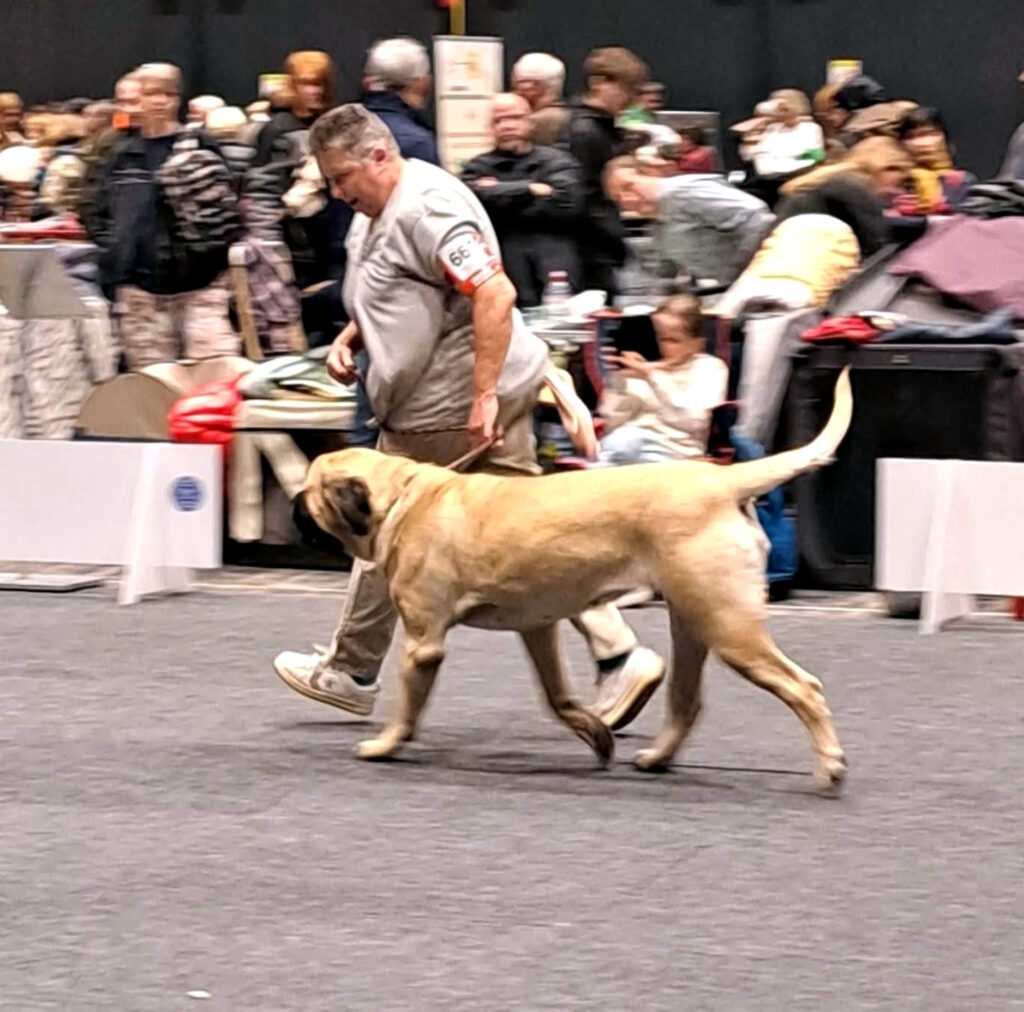
Learn more about Greta’s development, health tests and show successes in her profile, Greta from Gawy.
The Typical Head and Expression
The head is one of the Mastiff’s most distinctive features.
It should appear large, broad and powerful. The muzzle is short, broad and almost square. The black mask emphasises the characteristic expression. The comparatively small ears lie close to the sides of the head and should also be dark.
Wrinkles on the forehead and head are also typical, especially when the dog’s attention is aroused. When relaxed, however, the skin should not appear excessively wrinkled.
The eyes are set well apart and are hazel brown, with a darker colour preferred.
For me, however, a Mastiff’s special presence is not created by individual physical features alone. It comes from the interplay of head, eyes, posture and temperament.
A good Mastiff expression should appear attentive and self-assured without looking hard or unapproachable. His eyes may show exactly the calm sensitivity that we also experience in everyday life with the breed.
Mastiff Colours
The Mastiff is bred in three recognised colour varieties:
- Fawn
- Apricot
- Brindle
All three colours characteristically have a black mask, black ears and a black nose. The eyelids should also be outlined in dark pigment. The short, close-lying coat emphasises the powerful build.
For me, each colour has its own particular appeal.
A fawn Mastiff often has a particularly classic appearance. Apricot can have a warm, intense presence, while brindle gives every dog a highly individual look.
Nevertheless, colour should never become more important when choosing a puppy than health, temperament and the question of which dog is genuinely the right fit for a particular family.
A beautiful appearance may inspire admiration. Personality, however, determines whether that admiration develops into a harmonious life together.
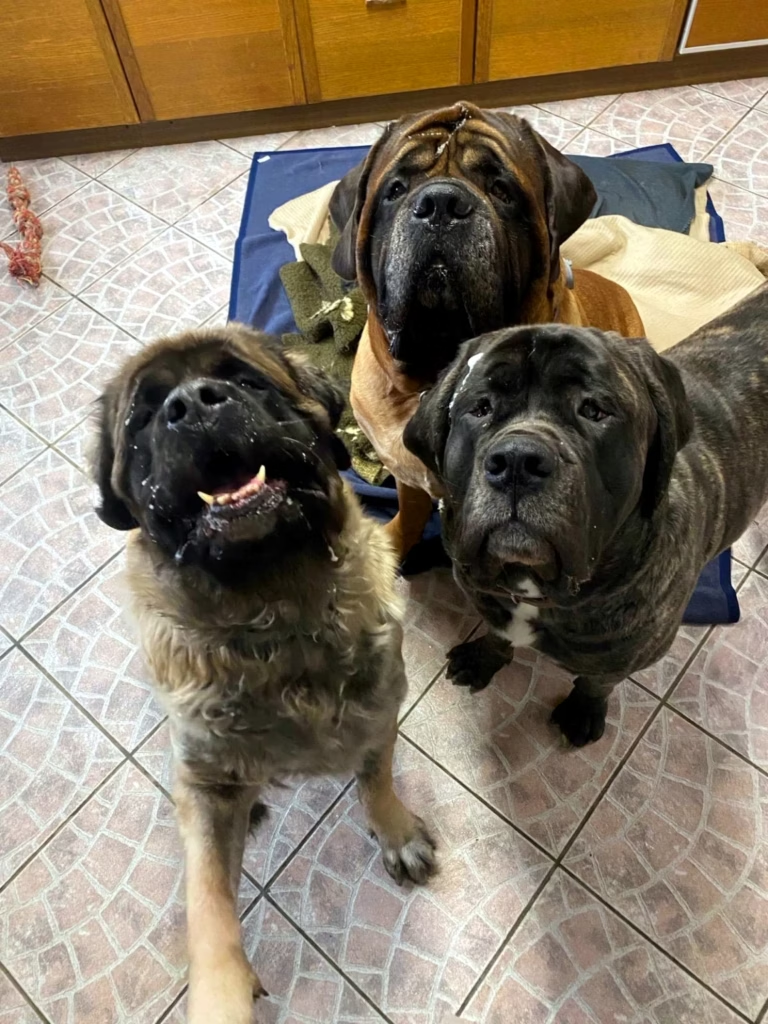
The Three Recognised Colour Varieties
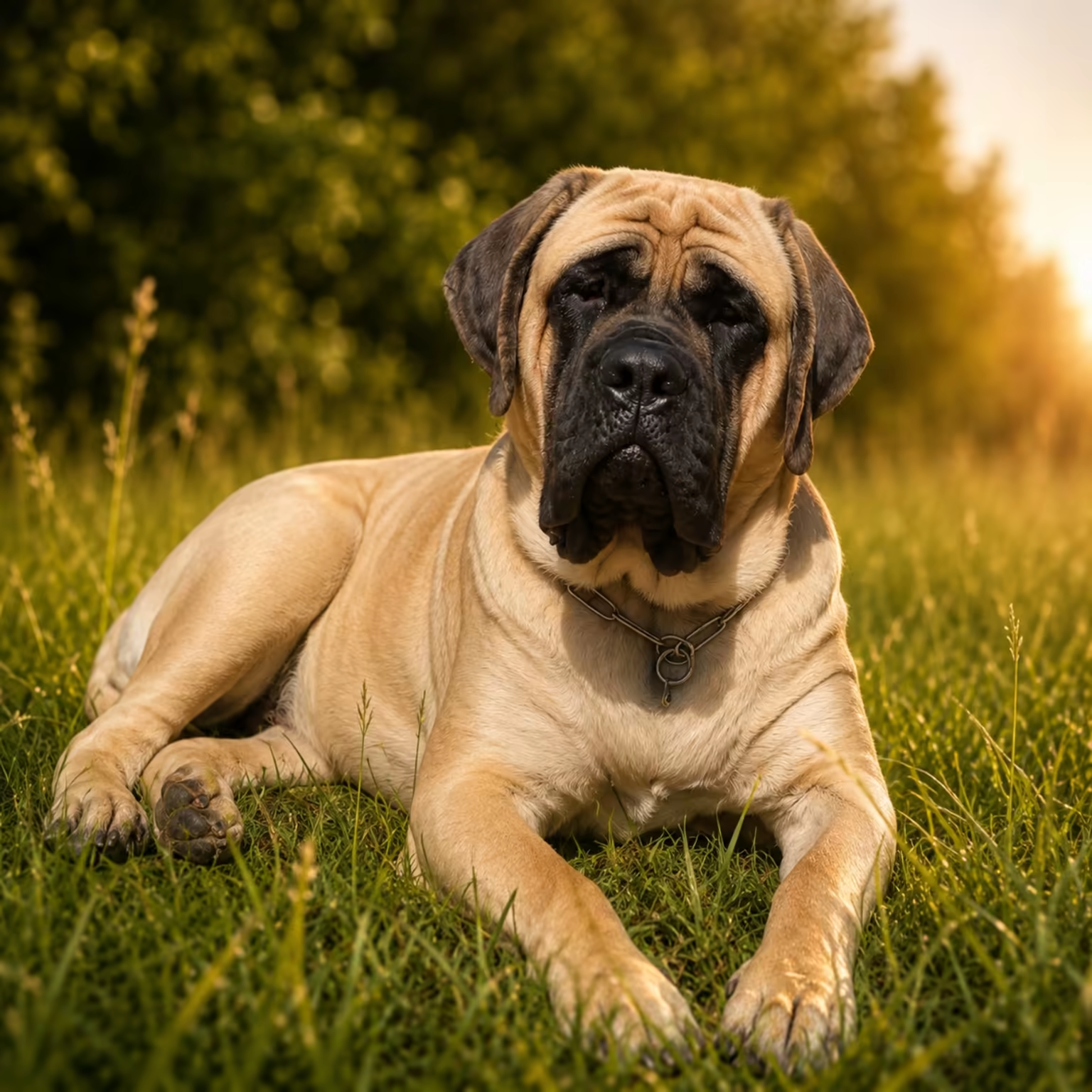
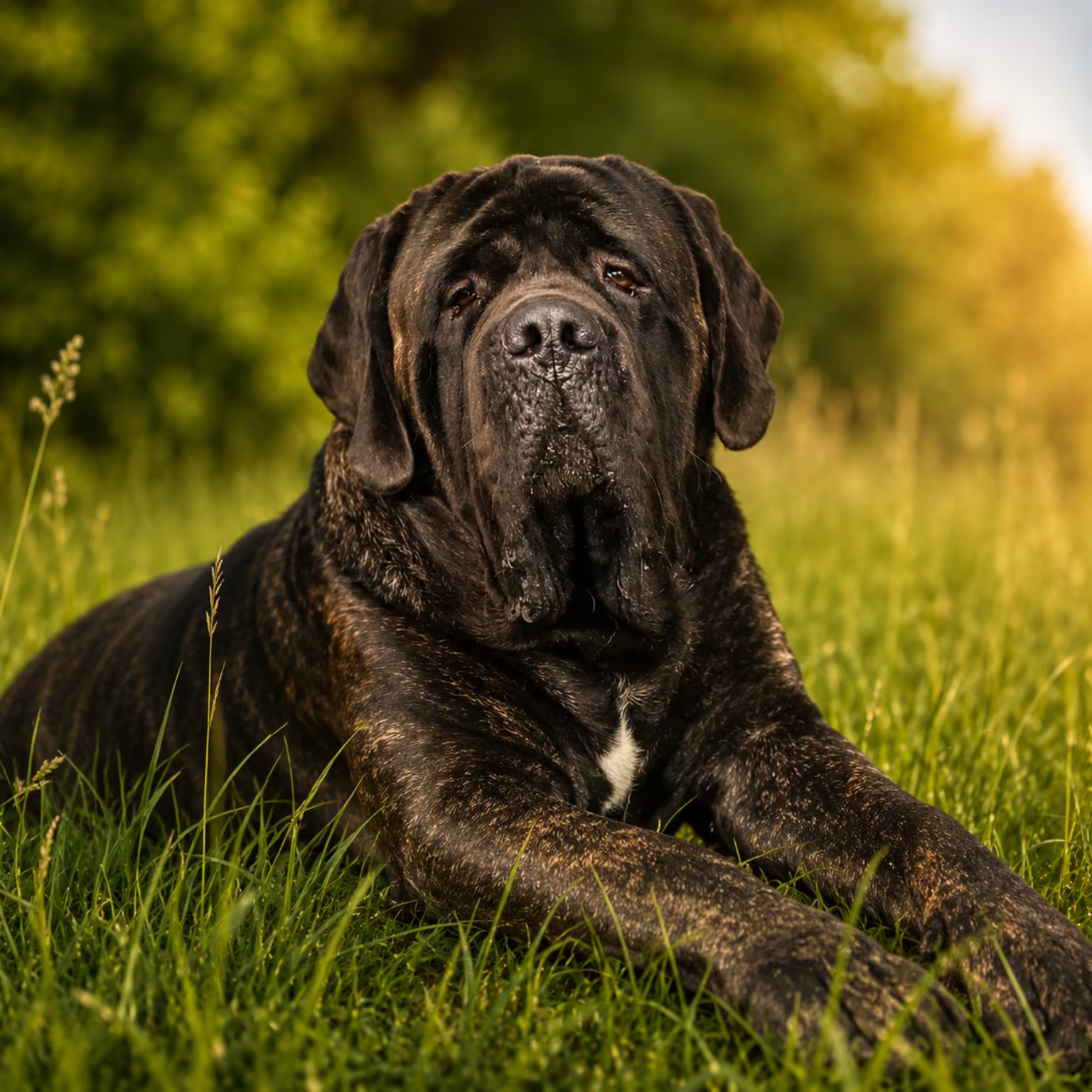
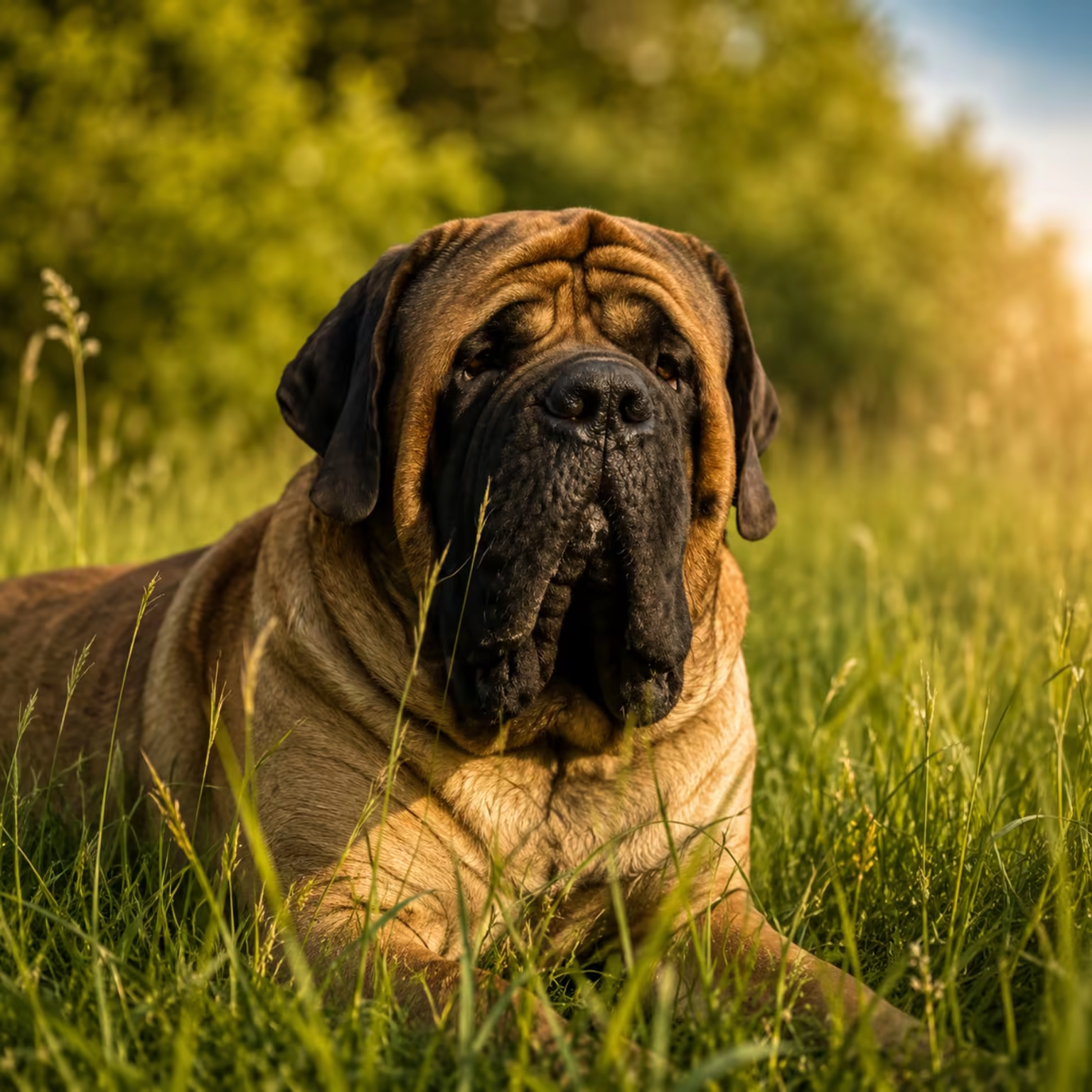
The three recognised colour varieties in our own dogs: Greta in fawn, Magnus in brindle and Ingo in apricot.
Temperament: Calm, Affectionate and Watchful
The breed standard describes the Mastiff as a combination of grandeur and courage. He should be calm and affectionate towards his owners, while also being capable of protecting them when necessary. Towards strangers, he is usually rather indifferent. Timidity or uncontrolled aggression are not characteristics of the desired temperament.
This description captures much of what I have come to love about the breed over the years.
A Mastiff does not need to comment on every sound. He does not have to rush towards every visitor or constantly prove how strong he is.
Many of our dogs are highly aware of what is happening around them. They tend to observe new situations calmly at first and look to the people they know and trust for guidance.
Mastiffs can be exceptionally affectionate with their own families. Some seek constant physical contact. Others prefer to lie a little distance away while still keeping an eye on everything.
They often have a calm, almost dignified manner – until they suddenly remind us just how much humour and individuality they also have.
Because this is part of the Mastiff too:
He can be playful, silly, cuddly and, at times, surprisingly stubborn.
A Mastiff does not obey simply because of his size. He wants to understand, to trust and to be taken seriously as a partner.
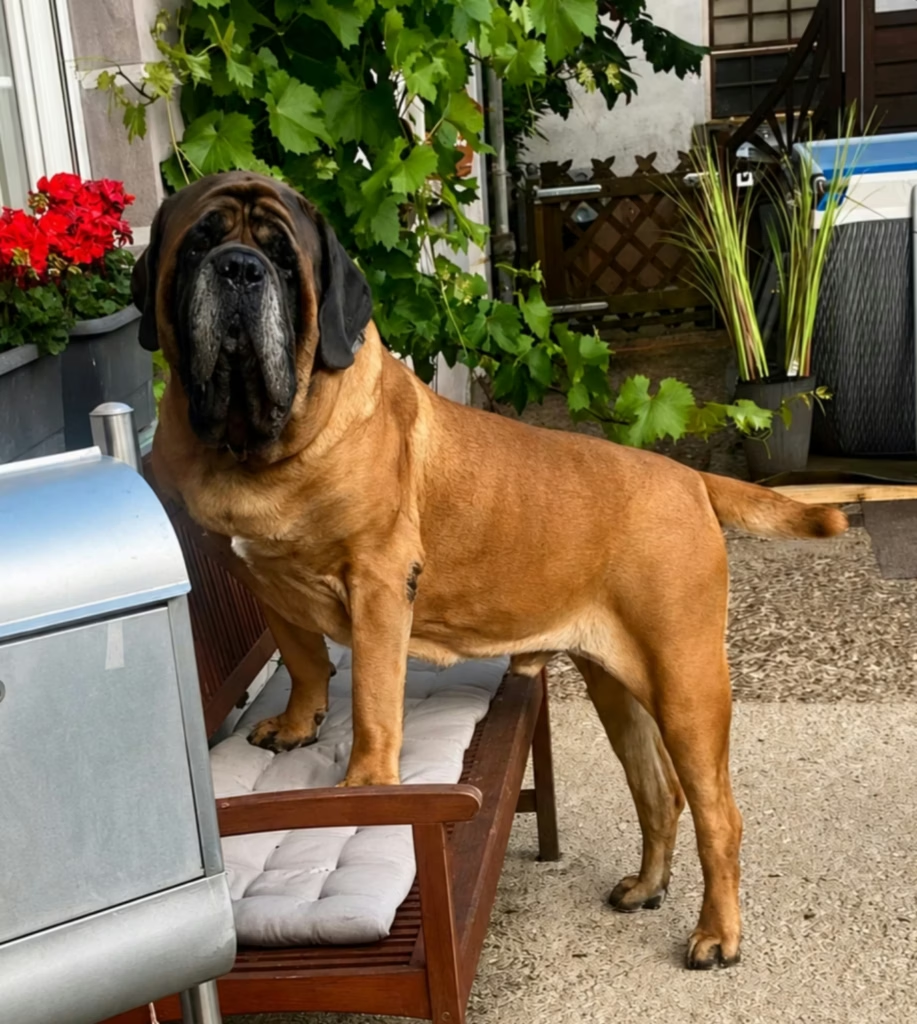
A Sensitive Dog Behind an Impressive Appearance
The Mastiff’s size can easily create the impression that he is exceptionally robust and insensitive.
In temperament, however, many Mastiffs are remarkably sensitive.
They notice moods, respond to the tone of their people’s voices and can distinguish very clearly between kind guidance and unnecessary pressure.
Harshness is neither necessary nor useful with this breed.
A Mastiff needs clarity, reliability and kind consistency. Rules should be understandable and, as far as possible, applied consistently by everyone in the family.
He should know where he stands – without ever having to be afraid of his people.
In my experience, the best partnership develops when a Mastiff genuinely trusts his person. From that trust grows a bond that makes calm and confident guidance possible despite the dog’s enormous physical strength.
A Family Dog with a Strong Need for Closeness
Our Mastiffs live right at the heart of the family.
For me, it would be difficult to imagine keeping this breed permanently separated from its people. A Mastiff wants to be part of everyday life.
That does not mean he needs to be kept busy all day. Often, it is enough for him to lie in the same room, hear familiar voices and know that his people are nearby.
He accompanies us through quiet days just as naturally as through special experiences.
He lies in the way just when we want to walk through the door. He claims the most comfortable place with impressive confidence. And he may be utterly convinced that many kilograms of body weight still fit perfectly well on a human lap.
It is precisely this closeness that makes living together so special.
The same basic principles apply around children as with any other breed: respectful interaction, clear rules and adult supervision are essential.
The Mastiff’s exceptional size and strength must always be kept in mind. Even a friendly, calm dog can accidentally knock over a small child.
When well socialised, lovingly guided and included in everyday life, however, a Mastiff can become a deeply bonded family companion.
We explain in detail how our puppies grow up with close family contact and are prepared for their future lives on our English Mastiff Puppies & Litter Planning page.
Training Starts with the Young Puppy
A Mastiff puppy is cute, clumsy and, at first, still comparatively easy to handle.
That changes more quickly than many prospective owners expect.
Responsible training therefore does not begin only once the dog is fully grown.
An adult Mastiff should have learned to:
- walk calmly on a lead,
- take guidance from his person,
- greet visitors in a controlled manner,
- accept grooming and handling calmly,
- get into the car,
- use a ramp,
- and cope calmly with everyday situations.
A Mastiff does not need excessive strictness to learn these things.
Patience, clarity and reliability achieve far more with this sensitive breed that forms such close bonds with its people.
A Mastiff who trusts his person can be guided pleasantly and safely through everyday life despite his size.
Good training ultimately gives him greater freedom. He can accompany his family to more places, receive visitors more calmly and take part in shared life more naturally.
Exercise with Balance and Common Sense
The Mastiff is not a dog for peak athletic performance.
That does not mean, however, that he does not enjoy being active.
A healthy adult Mastiff enjoys walks, outings and exploring his surroundings freely. Often, the shared experience matters more to him than covering a particularly long distance.
During growth, exercise needs to be adapted to the young body. A Mastiff develops enormous size and substance within a relatively short period of time.
Long, repetitive exercise, frequent jumping and physical overexertion therefore have no place in puppyhood.
At the same time, a young Mastiff should not be wrapped in cotton wool. He needs natural movement, different surfaces, play and varied experiences to develop body awareness, coordination and muscle strength.
We explain how we approach healthy, age-appropriate exercise in detail in our guide “Mastiff Puppy Exercise – How Much Is Healthy?”.
We also look at physical development in our article “Mastiff Puppy Growth”.
Care and Everyday Practicalities
The Mastiff’s short coat is relatively easy to care for. Regular brushing removes loose hair and supports healthy skin and coat.
Routine care should also include checking the ears, eyes, teeth, paws and nails.
And yes: drooling is part of life with many Mastiffs too.
Not every dog drools to the same extent. Even so, keeping a cloth in a convenient place can be remarkably practical.
Anyone who loves a Mastiff usually becomes fairly relaxed about marks on clothes, furniture and freshly cleaned surfaces.
The practical implications of their size should not be underestimated either.
A Mastiff needs:
- a sufficiently large resting place,
- sturdy equipment,
- a safe means of transport,
- enough space in the vehicle,
- suitable food,
- and a realistic long-term budget for veterinary care.
A huge house is not necessarily required. The available space should, however, be arranged so that a very large dog can move safely, rest comfortably and take part naturally in everyday family life.
Francis – A Bitch Who Made Mastiff History
A breed profile from my personal perspective would not be complete without mentioning Francis From the Burning Mountain of Bredwardine.
Francis was born on 28 August 1999. She was a fawn bitch and came from a litter of just two puppies.
She was bred by Johannes Schug and me. Her sire was International and Austrian Champion Bredwardine Brynilltyd. Her dam was Dutch, Luxembourg, German and International Champion Billa from the Burning Mountain.
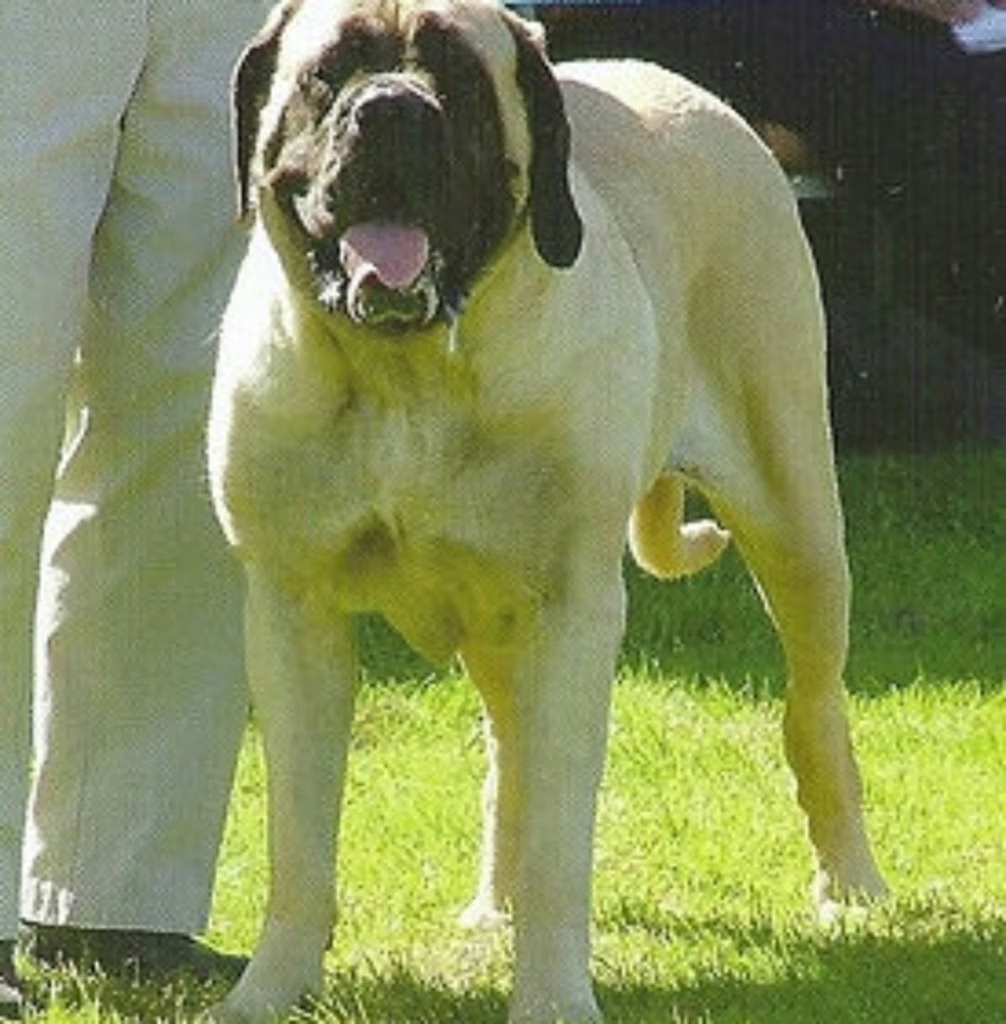
For me, however, Francis was never simply a future record holder.
First and foremost, she was a dog with her own personality, a distinctive expression and all the qualities we hope to see in a typical Mastiff.
She later continued her exceptional show career in Great Britain with Richard Thomas and Peter Tugwell.
For a bitch bred in Germany to receive such recognition in the breed’s country of origin was something very special to us at the time.
At her very first appearance in Great Britain, Francis won her class at Crufts in 2002. The following year, she received her first Reserve Challenge Certificate.
In 2004, she won 16 British Challenge Certificates, was awarded Best of Breed eleven times and was named Mastiff Bitch of the Year.
A further ten Challenge Certificates followed in 2005. That year, Francis also won Best of Breed at Crufts.
With her 26th Challenge Certificate, she set the then British breed CC record at the show in Darlington. As a result, she was listed as the British breed record holder from 2005 to 2006.
With 26 British Challenge Certificates, Francis became one of the most successful Mastiff bitches of her time.
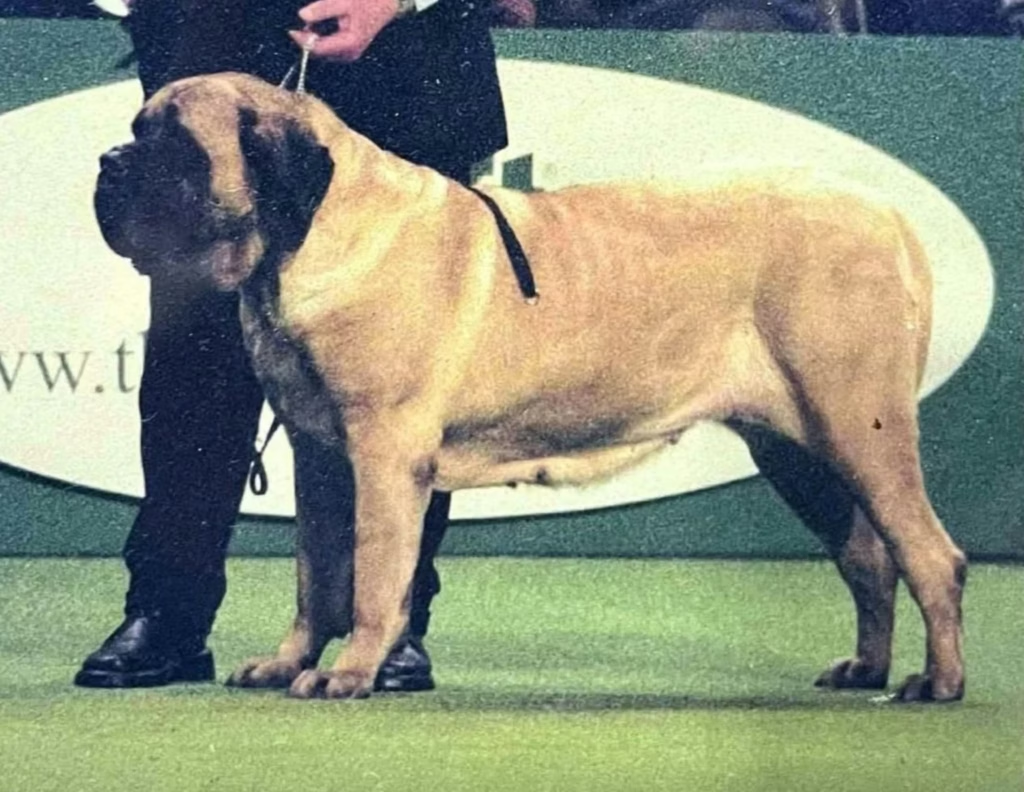
Her story is still tied to many memories for me today.
Not simply because of the number of awards she received. Francis was assessed by a wide range of judges and continued to impress over an extended period of time.
For a bitch bred by us to achieve such success in the Mastiff’s country of origin was an extraordinary recognition of our breeding work at the time.
A show career like that cannot be planned or forced.
As breeders, however, we can try to bring health, temperament, pedigree, structure and breed-typical expression together as responsibly as possible.
Francis therefore continues to remind me how much responsibility lies behind every individual breeding decision.
She is part of our roots.
Her story is not simply a chapter of past show success, but part of what continues to shape our connection with the Mastiff and our work today.
Show Success Is Not Everything
Dog shows make it possible to compare a dog with the breed standard and have him assessed by experienced judges.
They create opportunities to meet other breeders, exchange knowledge and observe the development of a breed over many years.
Even so, a title should never determine a dog’s value on its own.
First and foremost, a Mastiff should be healthy, sound in temperament and a good companion for his family.
The FCI standard emphasises that size is desirable only when combined with quality and complete soundness. Faults should also be assessed according to how they affect health and welfare.
That is the standard we set ourselves at From the Celtic Mountain.
We are delighted by show successes and proud of our dogs’ titles.
But our priorities will always remain:
- their health,
- their temperament,
- their physical development,
- their breed-typical expression,
- and the trusting relationship we share with them.
A championship title is a wonderful recognition.
But for us, the most important title will always remain:
Beloved family member.
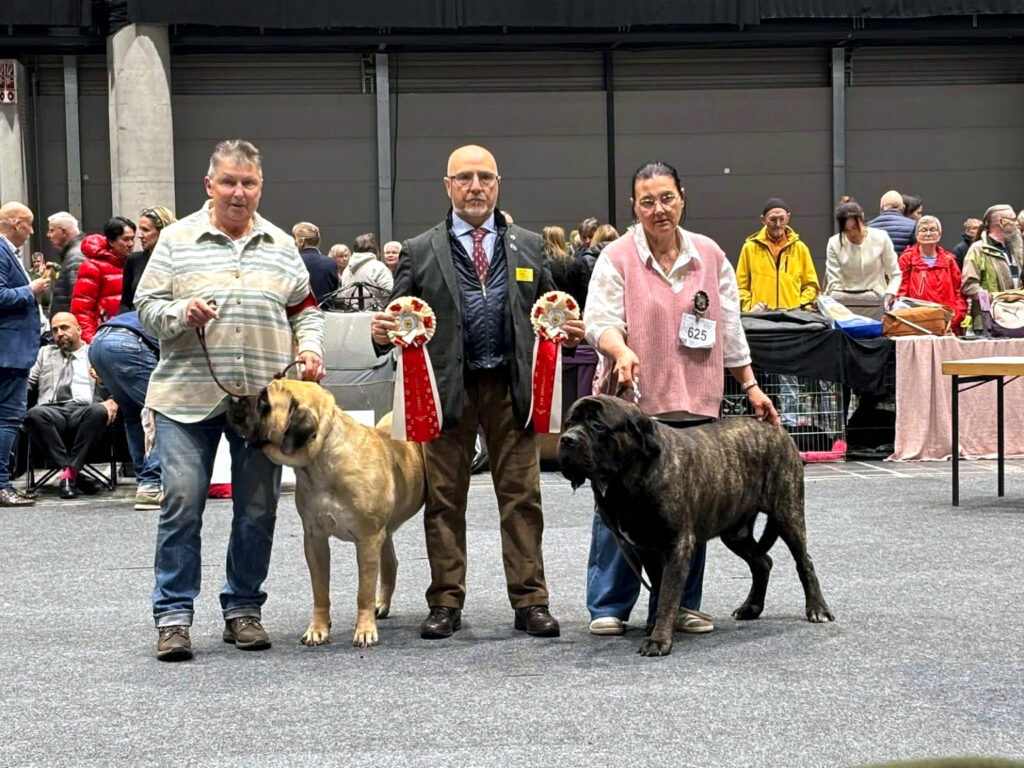
Show successes are part of our history and of our breeding today. For us, however, health, temperament and everyday life with our dogs will always remain at the centre.
Who Is an English Mastiff Right For?
A Mastiff is well suited to people who value his calmness and closeness and are prepared to take responsibility for his size in everyday life from the very beginning.
He is a good match for people who:
- are looking for a close family companion,
- train with kindness as well as clarity,
- appreciate a calm and dignified dog,
- plan for sufficient space and suitable transport,
- take a realistic view of the costs and responsibilities of a very large dog,
- and want to accompany their dog not only through the cute puppy stage, but through many years together.
He is less suitable for people looking for an endurance sports dog or those who are attracted only by his imposing appearance.
A Mastiff is not a living status symbol.
He is a sensitive dog with needs of his own, a strong desire for closeness and physical power that must be handled responsibly.
Those who understand his calm nature, take his quirks with humour and give him a secure place within the family can find an exceptionally loyal companion in the Mastiff.
Prospective owners who would like to learn more about a Mastiff puppy can find further information about raising, socialisation, health and getting to know us personally on our Puppies & Litter Planning page.
My Conclusion After More Than 30 Years
Even after all these years, the Mastiff has lost none of his fascination for me.
Every dog is different.
Some are especially calm and observant. Others are playful and full of little ideas. Some constantly seek closeness, while others prefer to keep an eye on their people from a little distance.
What they share is that special combination of strength and gentleness.
A Mastiff does not fill a room simply through physical size. He has a presence you can feel.
At the same time, he can fit into family life with such natural ease that it can seem as though that place had always been meant for him.
As an exceptionally successful bitch, Francis wrote an important chapter in our history.
Our dogs today do not continue that history as copies. Each of them brings their own personality, strengths and expression.
And for me, that is precisely where the beauty of breeding lies:
Preserving the history of a breed without standing still – and giving each new generation the best possible foundations for a healthy and loving life.
The Mastiff is large, powerful and impressive.
Above all, however, he is a dog with dignity, sensitivity and an enormous heart.
Looking Ahead to Ludwigshafen
On 15 and 16 August 2026, we will once again experience the Mastiff in a setting where appearance, temperament and movement can be examined particularly closely: the show ring at the double CACIB in Ludwigshafen.
On Saturday, Greta, Magnus and Miss Marple will be shown. On Sunday, Ingo will join us as well.
Especially in connection with this breed profile, I am looking forward to presenting our dogs once again with all the qualities that, for me, define a typical Mastiff:
Strength and harmony, calmness and presence, a sound character and a close bond with his people.
Of course, we are looking forward to Ludwigshafen and hope for positive critiques and good results.
But regardless of titles and placings, a show is also an opportunity for us to spend time with our dogs, meet fellow Mastiff enthusiasts and see the remarkable variety within the breed.
Every dog brings their own expression, structure and personality into the ring.
That is exactly what continues to make events like these exciting for me, even after many years.
After the weekend, we will report on Ludwigshafen in detail in our News section and share our favourite impressions, results and photographs.
Until then, we are looking forward to two special show days with our dogs – and to presenting the English Mastiff in all his dignity and personality.
Are you interested in our dogs, our breeding programme or the litter planned for early 2027? You can find more information in our 2027 litter announcement. If you have any personal questions, you are very welcome to contact us.
External Sources
This breed profile combines my personal experience from more than 30 years with Mastiffs with information from the following external sources:
- FCI Breed Standard No. 264 – Mastiff
Official FCI breed information covering the Mastiff’s origin, classification, breed standard and recognised characteristics. - Old English Mastiff Club – Breed Record Holders
Information about Francis From the Burning Mountain of Bredwardine, her pedigree, her 26 British Challenge Certificates and her time as British breed record holder from 2005 to 2006. - German Kennel Club (VDH) – Double CACIB Ludwigshafen
Official event information for the double CACIB in Ludwigshafen on 15 and 16 August 2026. - Club für Molosser e. V. – Mastiff Breeders
Overview of German Mastiff kennels listed by the club. From the Celtic Mountain is listed there as a Mastiff kennel run by Sybilla and Michelle Mansfeld.
External sources last checked: August 2026.