A Mastiff puppy grows in an astonishingly short time from a small, dependent puppy into an impressive and powerful companion. That is exactly why growth deserves particular attention in this breed. With an English Mastiff, faster and heavier does not mean better. Far more important is slow, steady development that protects the joints.
As breeders, we know from our own experience how differently puppies can develop. Some grow in spurts, while others develop more evenly. Some look strong and substantial early on, while others remain a little leaner at first and catch up later. What matters is not that every puppy looks exactly the same at every stage, but that each one develops in a healthy, balanced and age-appropriate way.
In this article, we would like to give an insight into how a Mastiff puppy develops through the different stages of growth, what owners should pay attention to and why patience, good nutrition, appropriate exercise and sufficient rest are so important.

Why Growth Is So Sensitive in a Mastiff
The English Mastiff is one of the largest and heaviest dog breeds in the world. But this enormous adult size does not develop overnight – it takes many months. During the growth phase in particular, bones, joints, ligaments and muscles are not yet fully mature or capable of handling the same stresses as those of an adult dog. This means that too much strain or unsuitable management at a young age can have negative effects later on.
For a Mastiff, it is therefore particularly important to:
- not artificially accelerate growth,
- provide a balanced diet,
- avoid physically overloading the puppy,
- and allow plenty of rest and sleep.
A strong Mastiff puppy should develop healthily – not simply become “big” as quickly as possible.
The First Weeks of Life – A Gentle Start
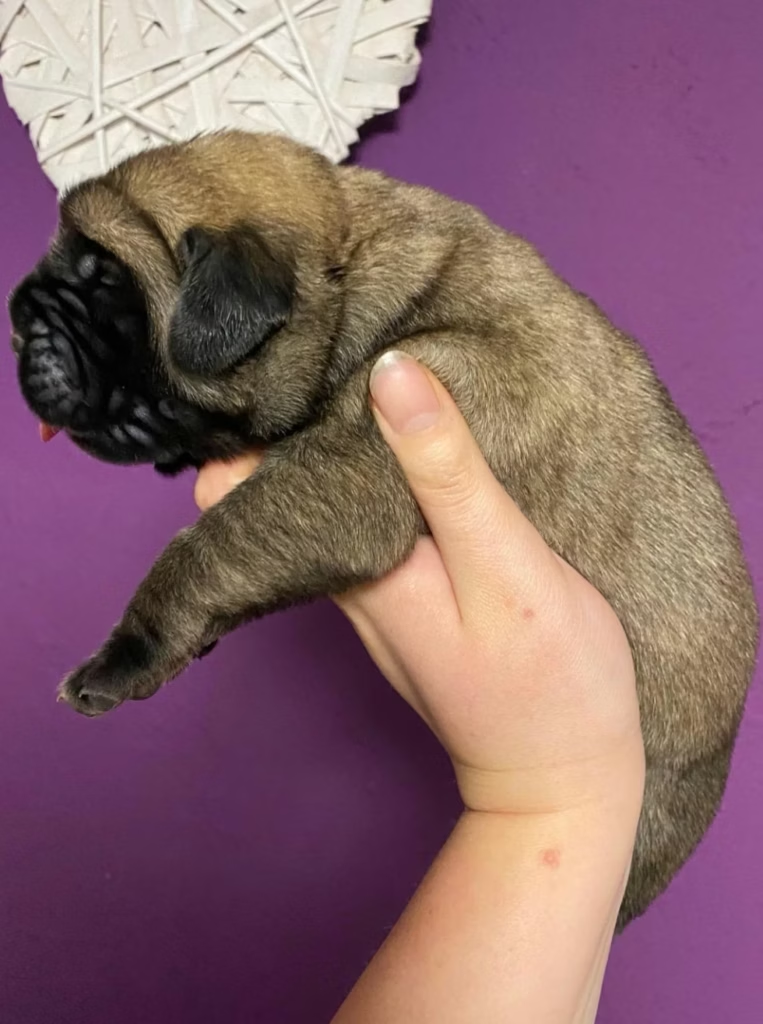
During the first few weeks, a Mastiff puppy is still completely dependent on its mother and the environment of the litter. Yet an incredible amount is already happening: the puppies gain weight, become stronger, open their eyes and ears, begin to experience their first stimuli and gradually learn to move around on their little legs.
At this early stage, however, it is not about “performance”, but about safety, warmth, milk, sleep and closeness. These first weeks lay the foundation for stable development.
For us, it is always fascinating to watch how quickly tiny sleeping puppies develop into little personalities. Even after a short time, differences in temperament, activity and expression become noticeable. But the same principle applies here as well: every puppy develops at its own pace.
You can find more special impressions from the first weeks of our puppies’ lives in our Puppy Gallery.
The Transitional Phase – From Newborn to Little Explorer
As soon as a puppy begins to respond more consciously to its surroundings, a particularly exciting phase begins. The puppies become more curious, start to play and discover their siblings, sounds, different surfaces and new impressions. Step by step, the helpless newborn becomes a little explorer.
During this period, development is not only physical. Mental development and socialisation are equally important. Puppies gather experiences that will influence them later in life. At the same time, their bodies continue to grow – still within a very sensitive stage of development.
Even though puppies already appear much more mobile at this age, it is important to remember that they are still very young. Too much excitement, too many new stimuli or too little rest are not helpful at this stage. A healthy rhythm of activity and sleep is far more valuable than constant entertainment.
When the Puppy Moves to Its New Home
Moving to a new home marks the beginning of an entirely new chapter for a Mastiff puppy. By this stage, the puppy is usually much more active, interested in its surroundings and ready to get to know its new family. At the same time, this is still a sensitive period: the puppy has to adjust to a new environment, new routines and new people.
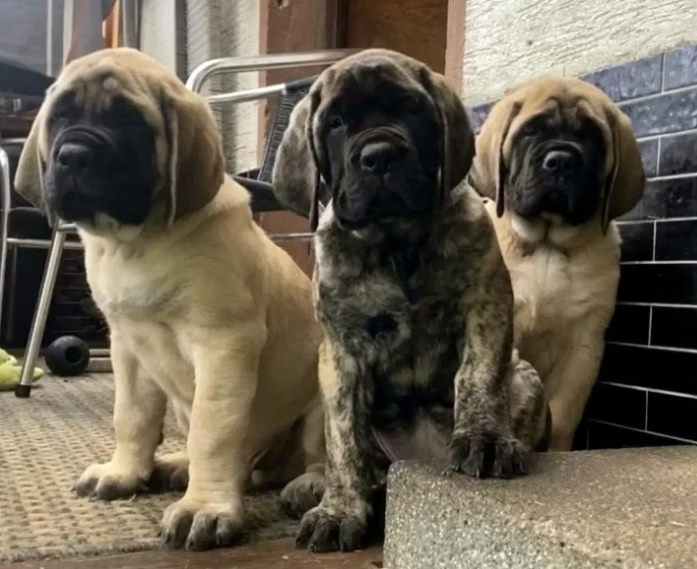
Many owners watch their puppy’s growth very closely during the first weeks – and that is a good thing. However, there is no need to worry if the puppy occasionally looks a little lanky or its proportions temporarily change. Large breeds in particular often grow in spurts rather than completely evenly.
Sometimes the legs may suddenly look a little too long, at other times the head may seem especially large, the chest may become broader, or the puppy may look slightly leaner for a while. Such phases can be perfectly normal as long as the dog is generally fit, happy, willing to move and developing well.
Healthy Growth Instead of Rapid Weight Gain
With large breeds in particular, there is often a great deal of focus on weight. Of course, it matters whether a puppy is well nourished and developing appropriately for its age. Nevertheless, weight should never be the only measure.
A Mastiff puppy does not need to be “as heavy as possible” in order to develop well. On the contrary, gaining weight too quickly can place unnecessary strain on an immature musculoskeletal system. A balanced overall appearance is far more important:
- The puppy should look strong, but not overly heavy.
- It should move freely and willingly.
- The ribs should not be prominently visible, but they should not disappear beneath a thick layer of fat either.
- Body proportions may change during growth, but the overall development should remain balanced.
For large breeds, controlled and relatively slow growth is almost always more sensible than trying to produce the heaviest possible young dog in a short period of time.
The Right Nutrition During Growth
Nutrition has a major influence on the development of a Mastiff puppy. A good puppy food formulated for large breeds should reliably provide what the dog needs without unnecessarily pushing growth. What matters is not only the amount of food, but also its composition.
Particularly important are:
- a balanced energy intake,
- food that is appropriate for the puppy’s stage of growth,
- avoiding unnecessary overfeeding,
- regular feeding times,
- and careful observation of physical development.
With very large breeds in particular, feeding excessively energy-rich food simply to build as much substance as possible is not advisable. Slower growth is often the better choice in the long term.
Additional supplements should also be used thoughtfully rather than added without a clear reason. More is not automatically better. If there is any uncertainty, professional advice is always worthwhile.
Exercise – Important, but Not Too Much
Many puppy owners ask themselves: How much exercise is right?
For a Mastiff, this question is particularly important. The basic principle is clear: exercise is important – but it must be appropriate for the puppy’s age.
A young Mastiff puppy should be allowed to discover the world, play, move and gain experience. At the same time, it should not be overloaded. Very long walks, running up and down stairs, jumping out of cars, constant rough play on hard surfaces or excessive physical strain can be unsuitable during the growth phase.
Better options include:
- several short, relaxed periods of activity,
- free exploration within appropriate limits,
- non-slip surfaces wherever possible,
- controlled play,
- and plenty of regular rest periods.
Puppies do not always stop by themselves when they have had enough. Especially when they are excited or highly motivated, they may keep going even though they are actually tired. It is our responsibility as humans to make sure they get breaks at the right time.
Rest and Sleep Are an Important Part of Growth
For a puppy, the right amount of rest is often almost as important as appropriate exercise. A young dog processes new impressions during sleep, and its body also recovers during this time. Large puppies in particular need a surprising amount of rest.
A healthy daily routine for a Mastiff puppy is not made up of constant activity, but of a balanced rhythm between:
- eating,
- short periods of activity,
- closeness and affection,
- small learning experiences,
- and plenty of rest.
Anyone who constantly provides a puppy with new stimuli, visitors, outings and activities usually means well – but may end up overwhelming the puppy rather than helping it. A calm, secure daily routine can be extremely valuable for healthy development.
Growth Spurts – What Can Be Perfectly Normal
Not every Mastiff puppy grows completely evenly. Many develop in noticeable growth spurts. During these phases, a puppy may temporarily look a little “unfinished”: perhaps taller on the leg, lankier or simply less balanced in its proportions than before. This is not automatically a problem.
As long as the puppy:
- is bright and alert,
- eats normally,
- enjoys moving,
- and appears healthy overall,
such phases can be a completely normal part of growth.
What matters is observing the puppy as a whole rather than deciding whether “everything is right” based on a single day or a small temporary change in appearance.
When to Pay Closer Attention
Of course, not every small change needs to be overinterpreted – but some signs should be taken seriously. If a puppy seems unusually listless, is reluctant to move, is clearly limping, shows signs of pain or appears generally unwell, it should be assessed by a veterinarian.
The same applies to questions about feeding, weight development or physical abnormalities. It is always better to seek professional advice than to wait too long when something seems unusual.
A healthy Mastiff puppy may be relaxed, clumsy and sometimes a little awkward – but it should not appear persistently restricted or uncomfortable.
From Puppy to Young Dog – Patience Pays Off
A Mastiff is not a breed that is “fully grown overnight”. Physical and mental development take time. Even if a young dog already looks imposing at an early age, it may still be far from fully mature.
That is precisely why it is worth approaching growth with patience. The goal is not a quick result, but healthy development over the long term. A Mastiff that is well supported during its early development has the best possible foundation for becoming a stable, balanced and powerful companion later in life.
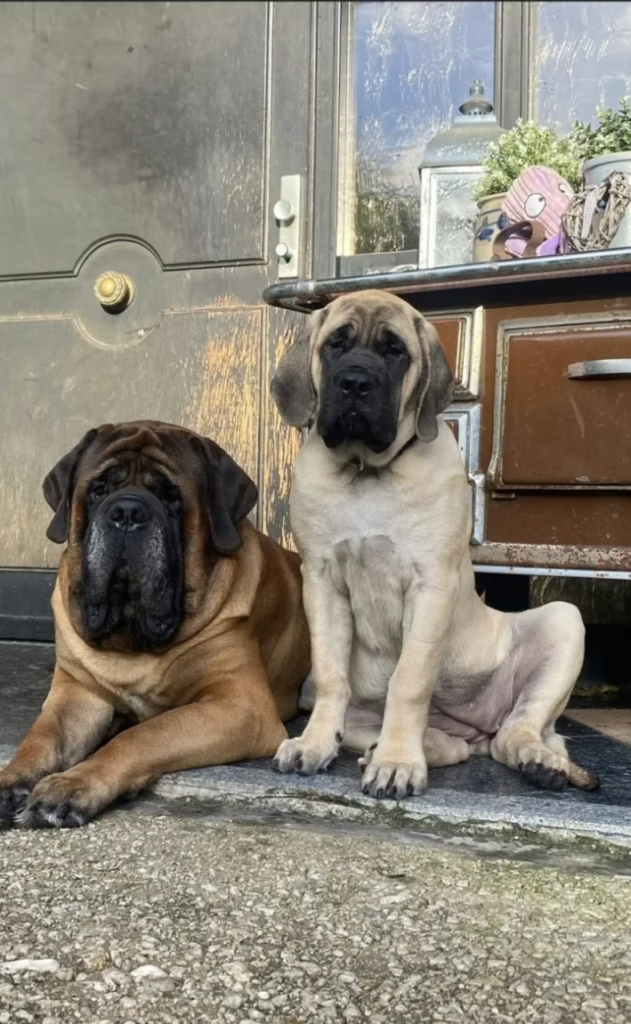
You can meet our adult English Mastiffs and learn more about their individual personalities on our Our Dogs page.
Our Conclusion
The growth of a Mastiff puppy is a special and sensitive phase. Precisely because these dogs become so large and heavy, it is important to give them time. The goal should not be the fastest possible growth, but healthy, controlled development that protects the joints.
A balanced diet, age-appropriate exercise, sufficient periods of rest and careful observation of the puppy’s individual development provide the best possible foundation for a healthy life.
Every puppy is an individual – and that is part of what makes this stage so special. Anyone who guides a Mastiff puppy through its development with patience, calmness and good judgement will be rewarded with a wonderful companion.
If you have any questions about our puppies, how they are raised or the development of a young Mastiff, you are very welcome to contact us.
On our Puppies & Litter Plans page, you can also find current information about our breeding programme and planned litters.
Note: This article provides general information and reflects our experience with the development of Mastiff puppies. It does not replace individual veterinary advice. If there are any concerns or questions regarding health, nutrition or physical development, a veterinarian should always be consulted.