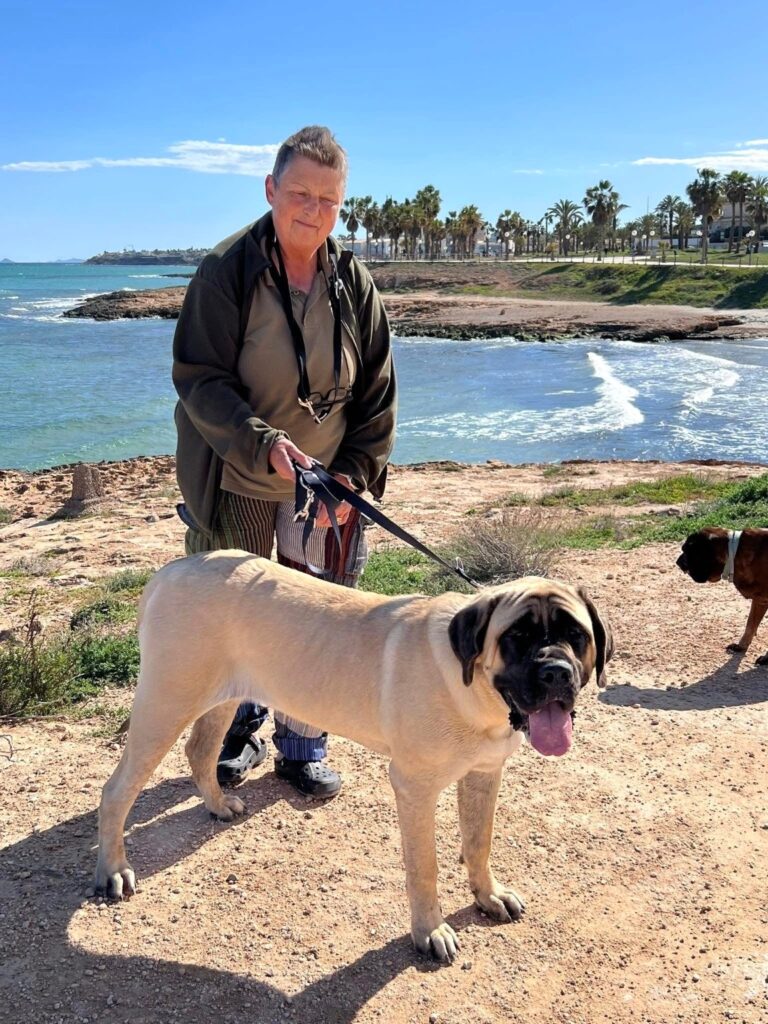
Are Mastiffs good for first-time owners? I hear this question again and again when speaking with prospective owners. I completely understand the uncertainty: when you stand before a fully grown Mastiff, the first thing you see is a very large and powerful dog. It is easy to assume that you should first gain experience with a smaller breed.
Based on my experience with the English Mastiff since 1995, however, I can say:
Yes, a Mastiff can make an excellent first dog.
Our puppies have joined both experienced dog owners and people who had never owned a dog before. We know many families for whom starting this journey together has worked wonderfully.
No one has to know everything already. We grow into our responsibilities – and alongside our dogs.
The Number of Dogs You Have Owned Before Is Not What Matters
Experience can be helpful in everyday life. Someone who has raised dogs before will recognise the typical stages of puppyhood, may already know a good training school and perhaps respond more calmly in certain situations.
However, this does not automatically mean that an experienced dog owner is better suited to a Mastiff.
Even people who have owned dogs for many years need to adapt to the distinctive temperament of this breed. Conversely, first-time owners often bring something especially valuable: they observe carefully, ask questions and want to understand from the very beginning what their dog needs.
When people ask us whether they could even be considered for a Mastiff without previous dog-owning experience, I therefore do not see it as a negative sign. Quite the opposite: the question itself often shows that they are taking their decision seriously and want to prepare responsibly.
To Me, the Mastiff Is a Thinking Breed
I often describe the Mastiff as a thinking breed. This is not an official classification, but to me it captures their nature very well.
A Mastiff does not usually act impulsively. They observe a situation, think about it and then decide how to respond. Of course, they have an impressive body weight and tremendous strength. As a rule, however, they do not simply use that strength without thought.
That is why training a Mastiff is not about being physically stronger. A calm presence, clear rules and reliable guidance are far more important.
A Mastiff pays close attention to their person. They notice tone of voice, body language and mood, and develop an exceptionally close bond. Those who treat a Mastiff with kindness, clarity and consistency will usually find themselves with a dog who thinks things through and willingly accepts their guidance.
With a Mastiff, the stronger person does not win. What matters is being the person they trust.
This is precisely where first-time owners have a valuable opportunity. They do not need to master techniques practised over many years. They can learn together with their dog from the very beginning.
A Large Dog Starts Out as a Small Puppy
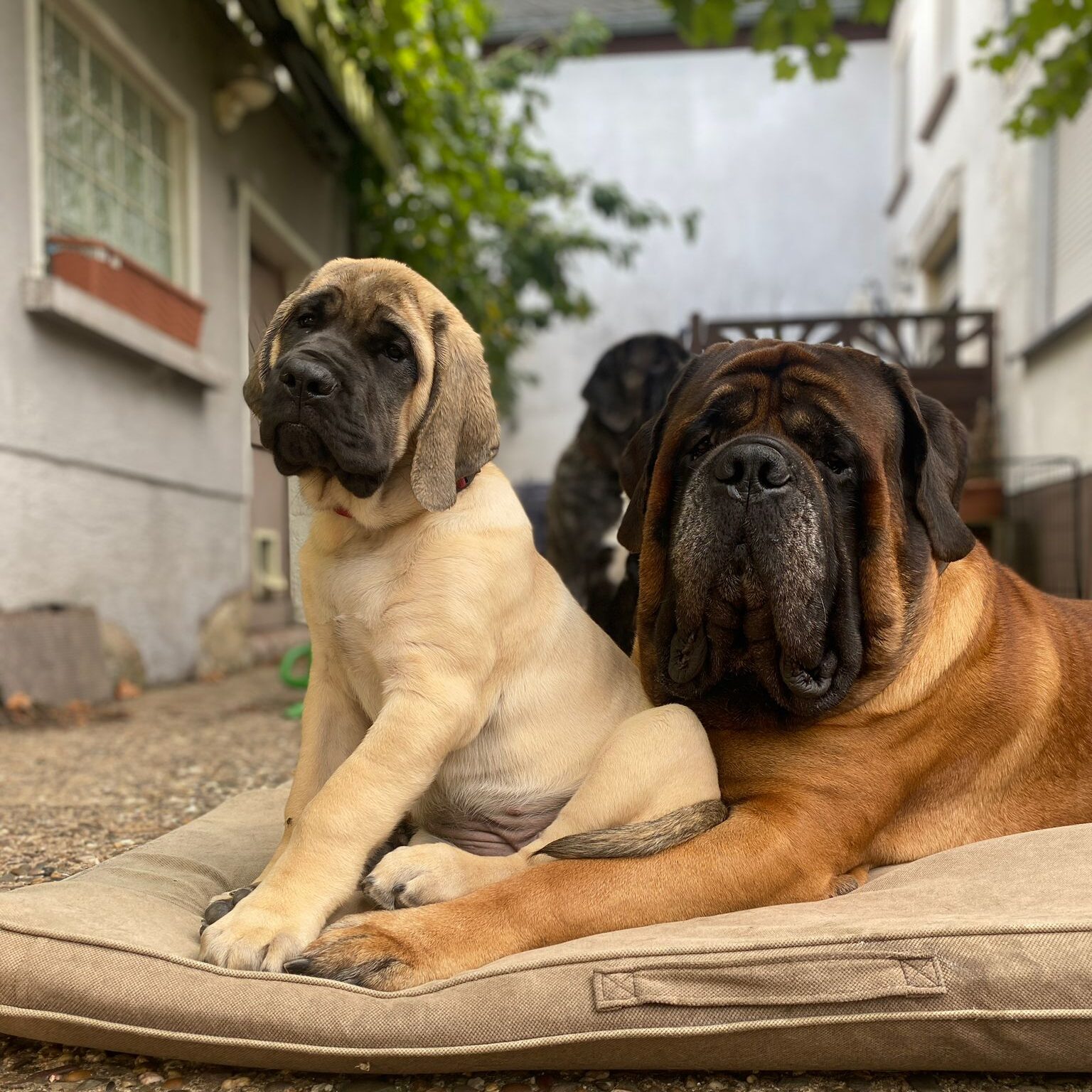
Of course, a Mastiff puppy is still a perfectly normal puppy. They can be boisterous, chew things, pull on the lead or appear to forget everything that had previously been going so well.
The main difference is that a Mastiff becomes very large within a relatively short time. It is therefore worthwhile to establish the important habits early and calmly: walking nicely on the lead, greeting people politely, settling down and looking to their person for guidance in everyday life.
None of this needs to work perfectly from the very first day. What matters is remaining kind and consistent, and reliably showing the dog what is expected.
A good training school or a trainer experienced with large dogs can provide additional confidence. Not because the Mastiff is inherently difficult, but because learning together from the beginning is enjoyable and prevents many uncertainties from arising in the first place.
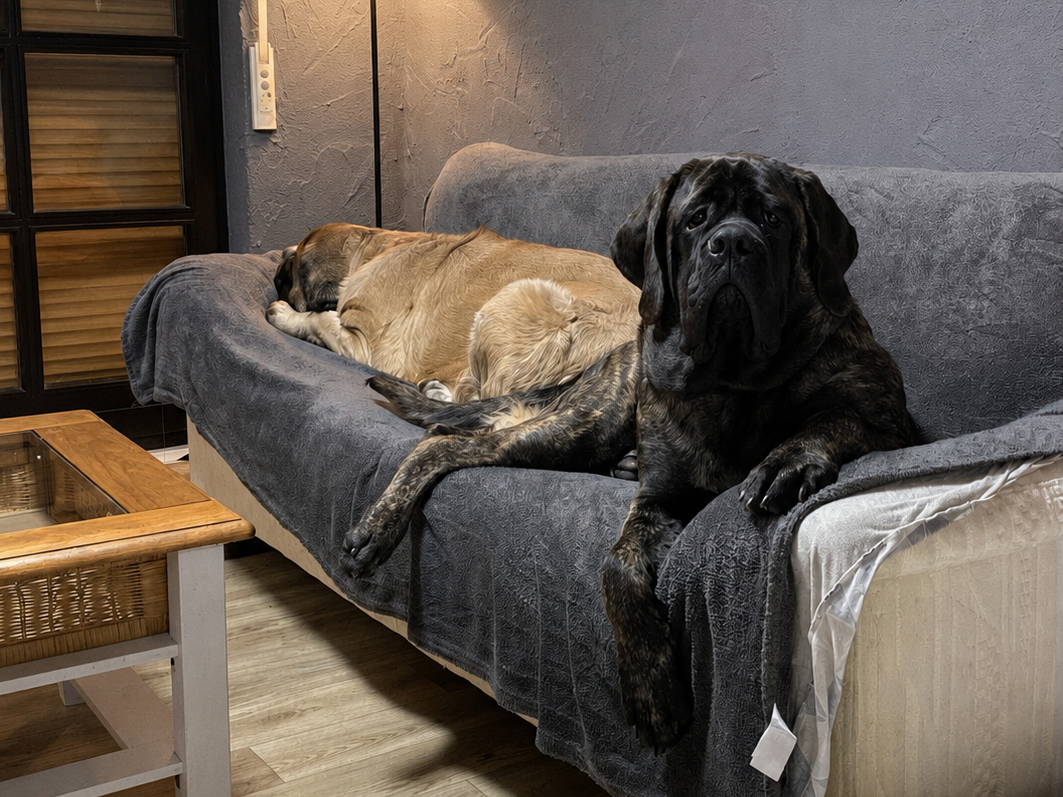
We introduce the different personalities of our adult dogs in more detail on the Our English Mastiffs page.
What a First-Time Owner Really Needs
To me, a future Mastiff owner does not need to provide a long list of dogs they have owned before.
Far more important is a willingness to get to know their own dog, ask questions and engage with their development. This requires patience, kind but clear boundaries and an understanding that no one can be expected to know every answer before living with their first dog.
Whether a Mastiff is generally suited to your life is a separate question. Space, time, costs and family routines should, of course, all be considered carefully. Our seven-day everyday-life test, “Is a Mastiff Right for Me?”, provides an initial guide.
A lack of previous dog-owning experience alone, however, is not a reason for me to advise against a Mastiff.
No One Has to Walk This Path Alone
A responsible breeder does more than simply hand over a puppy. They also help to find the right dog for each family, answer questions and remain available after the puppy moves into their new home.
That is why we like to get to know our prospective owners personally. We do not expect perfect answers or a fully developed training plan. We want to understand what their future daily life will look like, what appeals to them about the Mastiff and where they may still feel uncertain.
We also observe our puppies carefully from the very beginning. Each one develops their own personality. We take these differences into account when considering together which puppy might be a good fit for which family.
We are also happy to remain available after the puppy leaves us. No one should have to deal with a new situation alone or worry about asking a supposedly “silly” question.
You can learn more about how we raise our puppies and support their families on our Puppies and Litter Plans page.
Having Doubts Does Not Rule You Out
Anyone who wonders whether they can meet a Mastiff’s needs has often already understood something important: the decision to welcome a dog into your life deserves time and careful consideration.
Doubts do not automatically mean that a Mastiff is not right for you. Sometimes all that is missing is the opportunity to meet the breed in person and discuss your questions with people who have lived with Mastiffs for many years.
You therefore do not need to know for certain whether a Mastiff is the right dog for you before making initial contact. That is exactly what we can discover together.
My Conclusion
A Mastiff can be a wonderful first dog. We have often seen people grow in confidence alongside their first dog, gain experience and become an exceptionally close team.
What matters is not how many dogs someone has owned before. What matters is their willingness to understand this remarkable dog: their calm nature, their sensitivity, their thoughtful character and their close bond with their people.
A Mastiff does not need a perfect or particularly strong person. They need someone they can trust.
If you are interested in a Mastiff but are still unsure whether the breed would suit you and your daily life, you are very welcome to contact us without obligation. We will answer your questions openly and look forward to getting to know you.